.png)
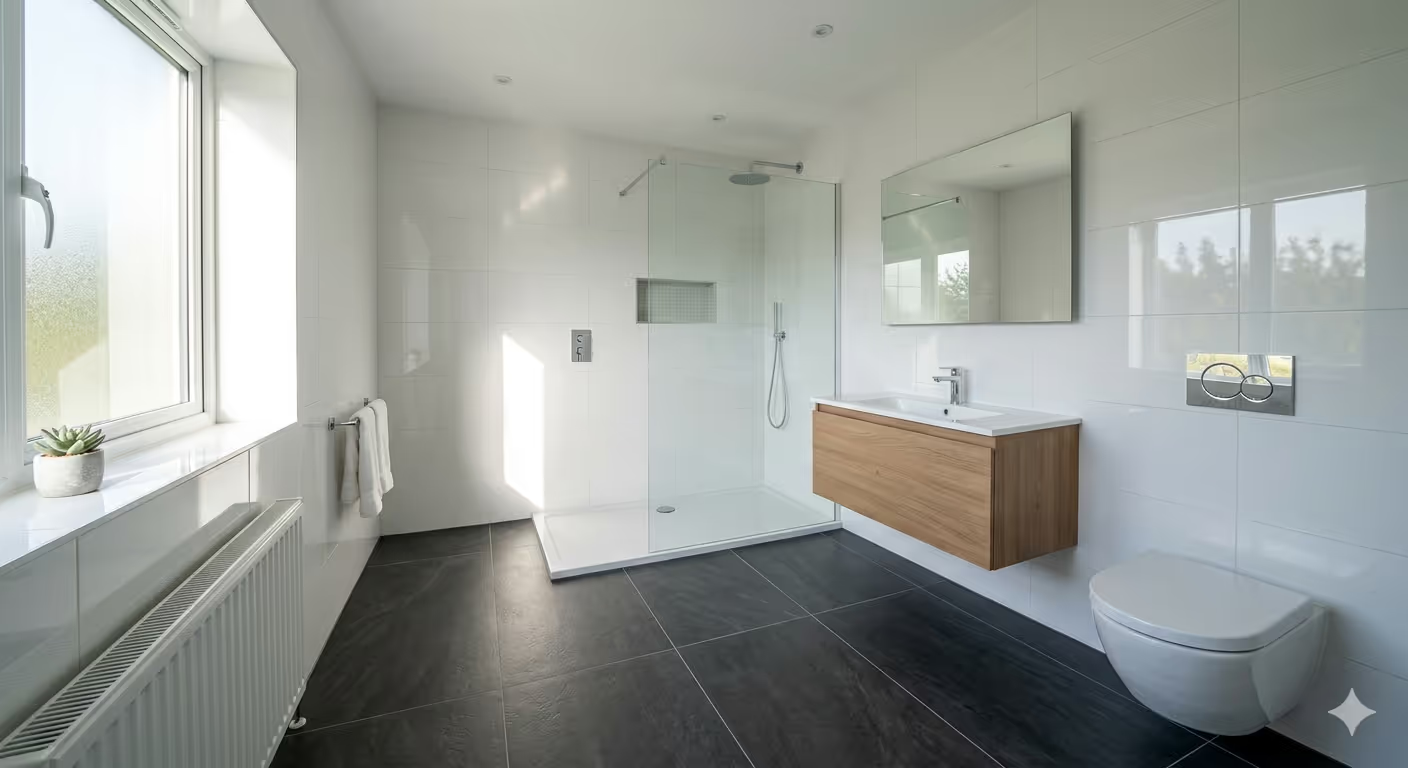
A small bathroom does not have to feel cramped. With the right tile choices and a bit of planning, even the most compact space can feel open, calm and well-designed. The problem is that most homeowners default to playing it safe, and end up with a bathroom that looks smaller than it actually is.
After years of tiling bathrooms across Kent, Essex, London and East Sussex, we have seen first-hand what works and what does not. Here is what we tell our customers before they buy a single tile.
Does Tile Size Actually Matter in a Small Bathroom?
This is one of the most common questions we get asked, and the honest answer is: yes, but not in the way most people think.
The old advice was to always use small tiles in a small room. That thinking has largely been replaced. Large format tiles, typically 600x600mm or bigger, can actually make a small bathroom feel more spacious because they reduce the number of grout lines. Fewer grout lines means less visual "noise," and the eye reads the floor or wall as a single, unbroken surface rather than a patchwork of smaller sections.
That said, large tiles are not always the right call. They require more precise installation, more cutting around fixtures, and a perfectly level substrate to sit correctly. On a floor that is not properly prepared, large tiles will not look right regardless of how good the tile itself is. This is one of the reasons professional installation makes such a difference.
Smaller mosaic tiles or metro tiles can still work well in small bathrooms, particularly on feature walls or in shower enclosures, but they tend to add visual complexity rather than reduce it.
Colour and Finish: How Light Behaves in a Compact Space
Colour is probably the single biggest lever you have when working with a small bathroom. Light colours reflect more natural and artificial light around the room, which creates a sense of space that darker tones simply cannot match.
That does not mean your only option is white. Pale greys, warm off-whites, soft greens and stone-effect tones all work well. What matters more than the specific colour is the overall lightness of the palette and how the finish behaves in your particular room.
Gloss wall tiles are a popular choice in compact bathrooms for good reason. Their reflective surface bounces light around effectively, which helps the room feel larger and brighter. They also wipe down very easily, which matters in a space where surfaces are close together and steam builds up quickly.
Matt tiles have become increasingly popular in recent years and can absolutely work in a small bathroom, particularly on the floor where a matt finish offers better grip. The key is to balance a matt floor against lighter walls, rather than going heavy on dark matt tones throughout a small space.
A combination approach, gloss wall tiles paired with a lighter matt floor, is one of the most effective ways to get the benefits of both finishes in a compact bathroom. We cover this in more detail in our guide on Matt vs Gloss Tiles: Which Finish Is Right for Your Home.
Grout Colour: A Detail That Changes Everything
Most people choose their tiles carefully and then make a snap decision on grout colour. That is a mistake.
Grout lines become more prominent in smaller rooms simply because you see more of the overall surface at once. Matching your grout closely to the tile colour minimises those lines and lets the tile itself be the feature. This works particularly well with large format tiles where you want the surface to read as continuous.
Contrasting grout, for example dark grout with a white metro tile, can look striking but it adds visual complexity to the space. In a large bathroom that is often fine. In a small bathroom, it can make the room feel busier than it is.
Tile Layout and Direction
The direction you lay tiles has a measurable effect on how a room feels. Here are a few approaches that work well in small bathrooms:
- Horizontal laying on walls makes a room feel wider
- Vertical laying draws the eye upward and adds a sense of height
- Diagonal laying on floors creates depth and can make a floor area look larger than it is
- Brick bond or offset patterns add character without being overly busy
The right choice depends on the specific proportions of your bathroom. A very narrow bathroom benefits from horizontal wall tiles. A bathroom with a low ceiling might benefit more from vertical laying. This is the kind of detail worth discussing with your tiler before installation begins, because it affects the tile quantities you need to order as well.
Continuity Between Floor and Wall
One of the most effective things you can do in a small bathroom is carry a similar tone or material from the floor up the wall. This blurs the boundary between the two surfaces and removes the visual "break" that makes a room feel smaller.
It does not mean using exactly the same tile on both surfaces. In fact, using the same tile throughout can sometimes look flat. A floor tile in a textured stone effect paired with a complementary wall tile in a similar tone creates depth without introducing jarring contrast.
Practical Considerations Before You Buy
Before committing to any tile for a small bathroom, it is worth asking a few questions:
- Has the substrate been properly prepared? Large format tiles in particular need a flat, stable base.
- How much natural light does the room get? This should directly influence your finish choice.
- What fixtures are already in place, and what colour are they? Chrome, brushed brass and matt black all sit differently against tile colours.
- What is your grout plan? Budget for quality grout and the right colour before you start.
Getting these details right before the tiles arrive on site saves a lot of time and avoids costly mistakes.
Get Expert Advice Before You Start
Choosing tiles for a small bathroom is rarely as simple as picking something that looks good in a showroom. Lighting, room proportions, substrate condition and the quality of installation all play a role in the final result.
JB Tiling works with homeowners across Kent, Essex, London and East Sussex to help get these decisions right from the start. Whether you are planning a full bathroom renovation or simply refreshing an existing space, we can advise on tile selection and deliver the kind of professional finish that makes a real difference.
Get in touch to discuss your project or to arrange a quote.
Thinking about an office renovation? Read our guide on commercial tiling.
Choosing Tiles for Small Bathrooms: Design Tips That Maximise Space
17/05/2026