.png)
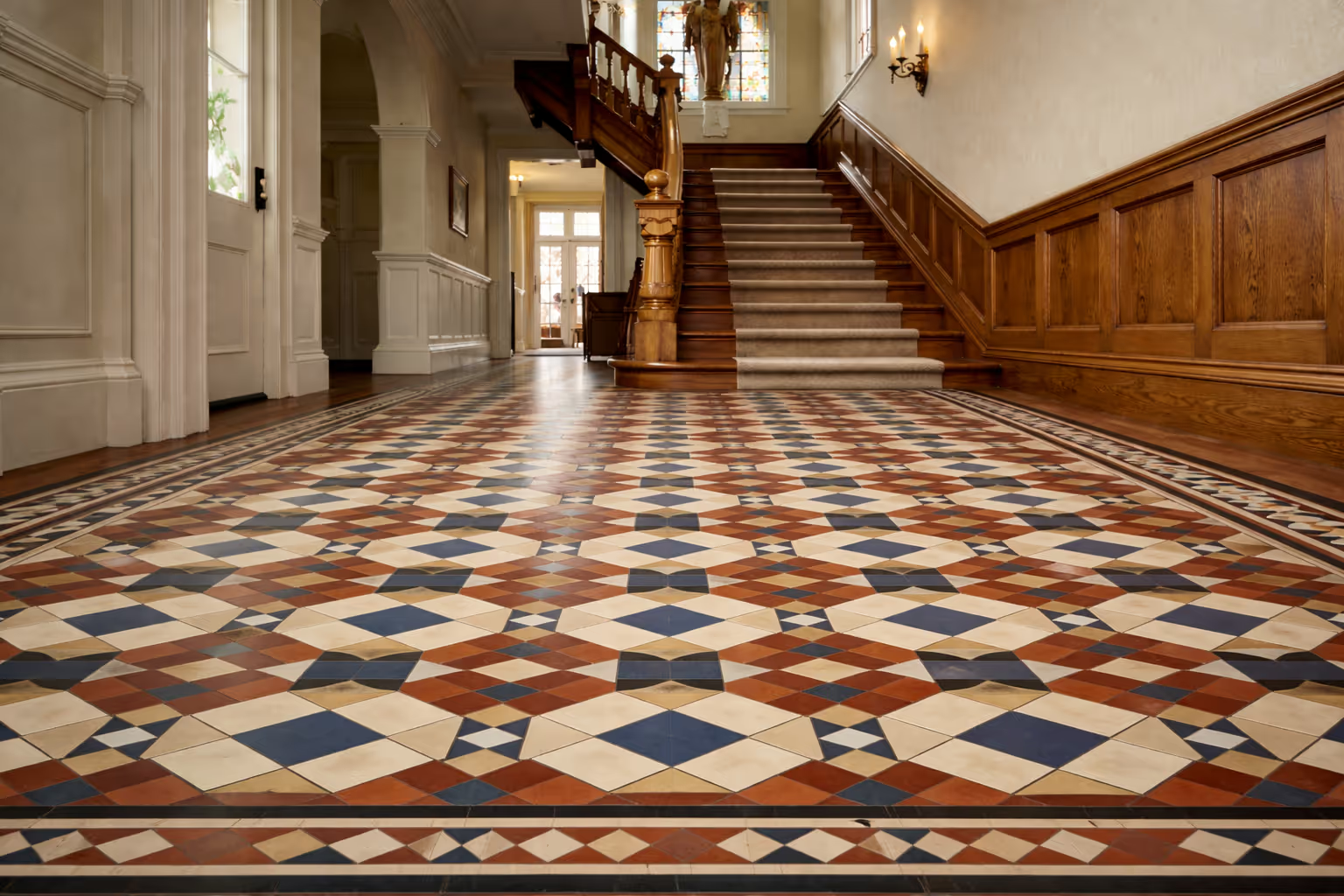
Across London, Kent and East Sussex, period homes offer distinctive charm, from Victorian hallways to Edwardian fireplaces. However, tiling older homes requires more than simply selecting a traditional pattern. It demands technical preparation, structural awareness and design sensitivity to preserve character while delivering modern durability.
The Hidden Challenge: Substrate and Floor Levelling
In heritage properties, floors are rarely level and timber substructures often move over time. Attempting Victorian tile installation without addressing this movement can lead to cracking and failure.
Proper preparation typically includes stabilising timber, installing decoupling membranes to absorb movement, and carefully levelling the surface before tiling begins. Substrate preparation is the foundation of any successful heritage tiling project and should never be overlooked.
Classic Patterns: Victorian Path and Geometric Designs
Hallways and porches in period homes often feature bold geometric floor tiles and encaustic patterns. These designs are intricate and must be centred carefully, especially in spaces that are not perfectly square.
Precision is crucial. A misaligned pattern is immediately noticeable and can undermine the elegance of the entire entrance.
Modern Performance, Traditional Aesthetic
Today’s porcelain manufacturing allows homeowners to achieve classic aesthetics without the upkeep challenges of traditional materials. Porcelain tiles can replicate heritage patterns while offering improved durability and stain resistance.
This approach combines authenticity with practicality, making it ideal for busy households seeking long-term performance.
Why Precision Matters in Period Tiling
Period rooms rarely have perfectly straight walls or consistent angles. Achieving symmetrical layouts in these environments requires experience and careful measurement.
Heritage tiling is about proportion, balance and detail. It’s a craft that demands patience and expertise, particularly when working within the constraints of older architecture.
Looking for more contemporary inspiration? See our Top Tiling Trends of 2025 for a modern perspective.
Conclusion
Tiling a period property requires both respect for its history and a commitment to technical excellence. From substrate preparation to pattern alignment, every stage must be handled carefully.
If you’re restoring a heritage home in London, Kent, Essex or East Sussex, working with experienced specialists ensures your tiling enhances the property’s character while standing the test of time.
Tiling Period Homes: Combining Classic Style with Modern Durability
22/02/2026