Large-format tiles for a cleaner look
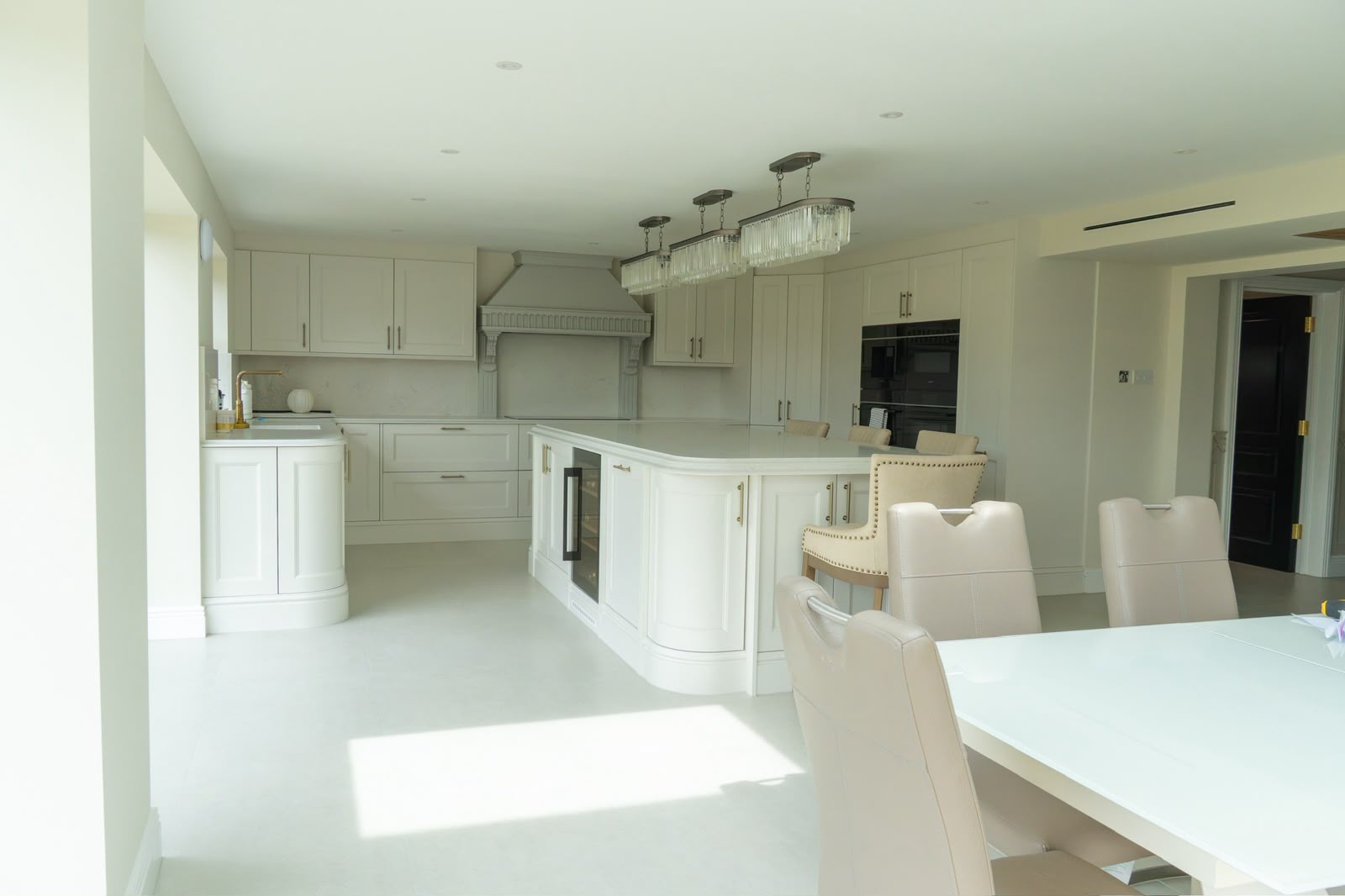
Large porcelain tiles mean fewer grout lines, which gives walls and floors a calmer, more seamless appearance and makes cleaning easier. In smaller bathrooms they can make the room feel bigger, because the eye is not broken up by a grid of joints.
Large tiles do need a very flat surface and careful fixing to avoid lippage and hollow spots, so preparation matters more than with smaller tiles. Done well, they are one of the most effective ways to make a bathroom feel modern and spacious.
Marble and marble-effect finishes
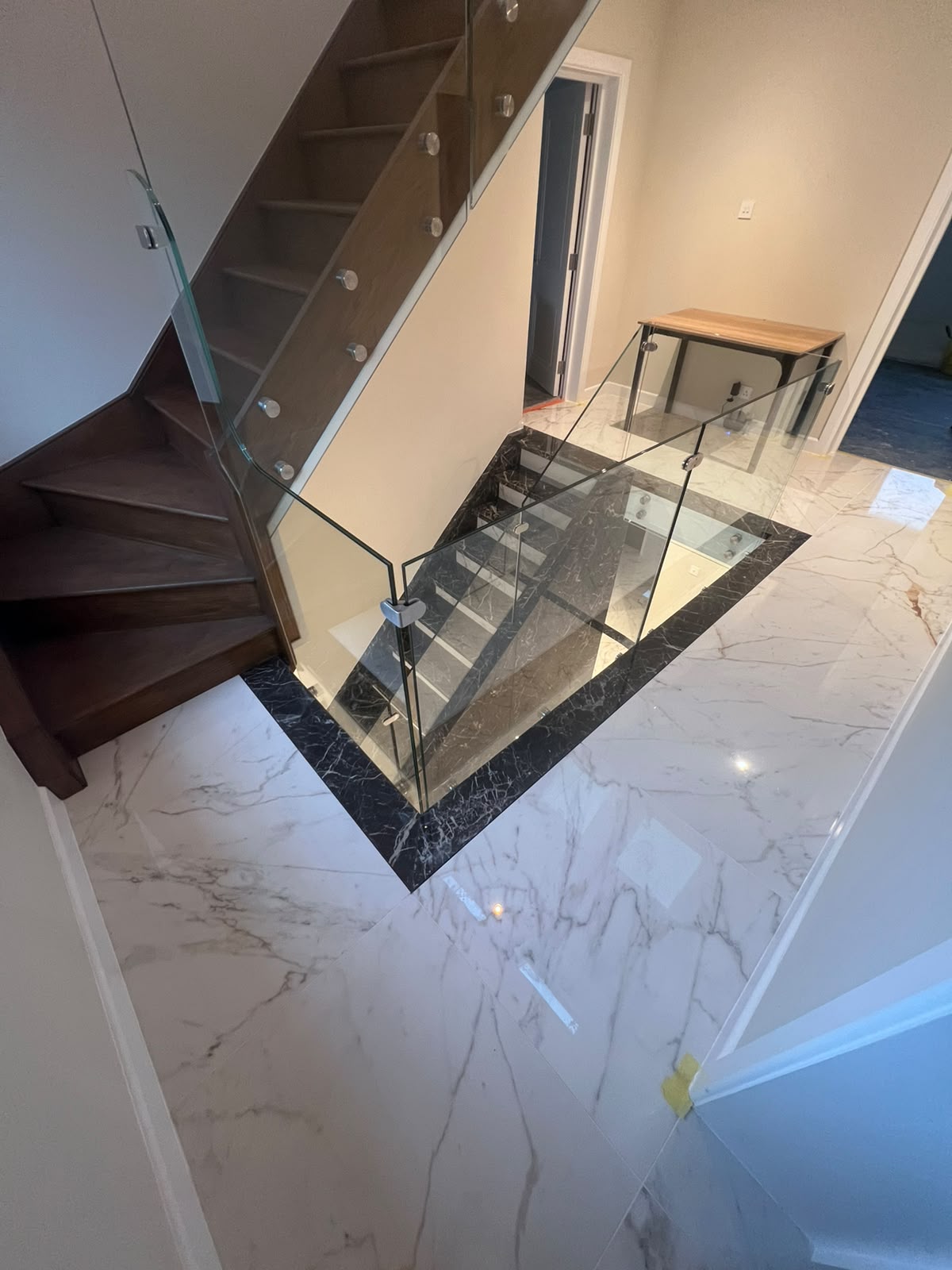
Marble has a timeless appeal in bathrooms. Real marble brings natural depth and variation but needs sealing and gentle cleaning. Marble-effect porcelain gives a very similar look with lower maintenance and greater resistance to staining, which suits busy family bathrooms.
Grey, white and warmer cream marble effects all work well. Matching the veining direction across walls, or running a single tile design from floor to ceiling, creates a high-end finish without needing a busy pattern.
Herringbone and pattern layouts
Herringbone and chevron layouts add movement and craftsmanship to a floor or a feature wall. They work with simple rectangular tiles, so the pattern does the work rather than the tile design. A herringbone shower wall or floor can become the focal point of the room.
Patterns need careful setting out from the centre of the space so they run straight and finish evenly at the edges. They take longer to fit than a straight lay, but the result is distinctive and long-lasting.
Feature walls and niches
Rather than tiling every wall in a bold design, many of the best bathrooms use one feature wall, often behind the bath, vanity or in the shower. It adds personality while keeping the room balanced. Onyx-effect, textured or deeply coloured tiles work well in this role.
A recessed shower niche gives you storage without a bulky caddy and looks built-in. Adding lighting to the niche turns it into a feature. Niches look best when the tile layout is planned around them, so the grout lines align.
Mitred edges instead of trims
Plastic or metal edge trims are the quickest way to finish an external corner, but they can cheapen a well-tiled room. Mitred edges, where both tiles are cut at 45 degrees and meet in a clean, sharp corner, give niches, window reveals, boxing and shelves a seamless, solid look.
Mitring takes skill and time, which is why it is often a sign of a high-quality bathroom. It is particularly effective with marble and stone-effect tiles, where the pattern appears to wrap around the corner.
Walk-in showers and wetrooms
Level-access showers and wetrooms create an open, contemporary bathroom and are practical for every age. Continuous floor tiles running into the shower area make the room feel larger. Linear drains can be tiled in so they almost disappear.
These designs depend completely on waterproofing and correct floor falls, so the water drains away rather than pooling. That work sits beneath the tiles, but it is what makes a wetroom last.
Choosing tiles that keep their appeal
Trends change quickly, so it can be wise to keep the main surfaces timeless, such as natural stone looks, soft neutrals and classic layouts, and bring in character through a feature wall, niche or pattern. Matt finishes on floors give better grip. Grout colour matters too: a close match creates a seamless look, while a contrast highlights the pattern.
Underfloor heating beneath a tiled floor adds comfort and frees up wall space, and is easiest to include during a refurbishment.
Planning your bathroom
Good bathroom tiling is a mix of design and preparation. The layout, the tile choice, the waterproofing and the finishing details all have to work together. James and his team carry out bathroom tiling and full bathroom refurbishments across Kent and South East London, with one point of contact from start to finish. Request a free estimate to talk through your ideas.
Find out more about our bathroom refurbishments in Kent or see examples on our work.
Common questions
- What tiles make a small bathroom look bigger?
- Large-format tiles in light colours with a close-matching grout reduce visual breaks and help a small bathroom feel more spacious.
- Is real marble a good idea in a bathroom?
- It looks beautiful but needs sealing and gentle, acid-free cleaning. Marble-effect porcelain gives a similar look with less maintenance.
- What is a mitred edge?
- A corner where two tiles are cut at 45 degrees and meet cleanly, giving a seamless finish without plastic or metal trim.