
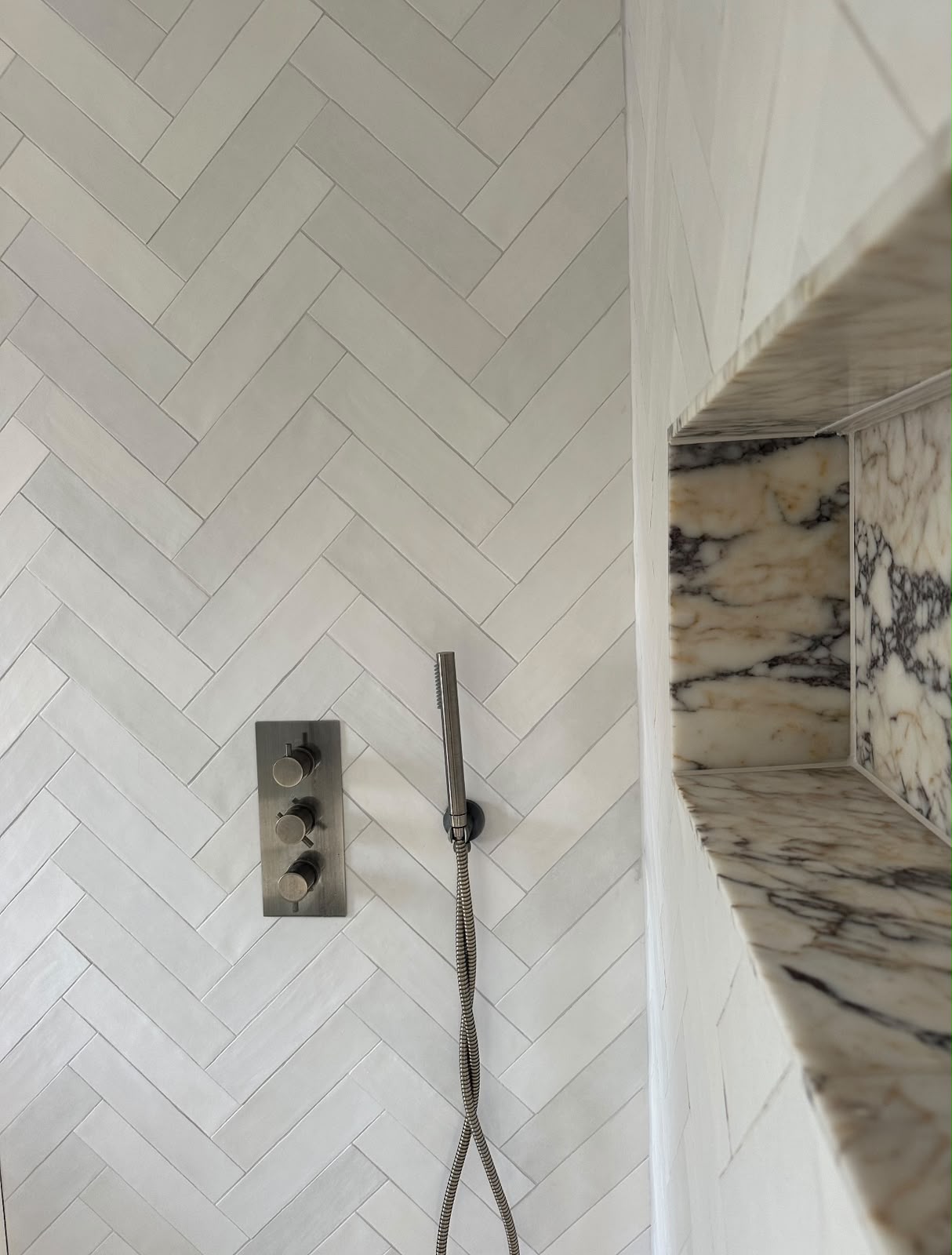
Herringbone TileInstallation Across Kent &South East London
A herringbone floor or wall set out from a true centre line before a single tile is cut, so the angle stays consistent from the first row to the last.
4.9 on Google · Herringbone specialist · 1-year workmanship guarantee
£10m
Public liability insurance
1 year
Workmanship guarantee
7 years
Tiling experience
4.9
Google rating
From £55/m²
Fixed tiling prices
What herringbone tile installation involves
Herringbone lays rectangular tiles at right angles in a zigzag, and it exposes error immediately. A pattern a fraction of a degree out at the start is visibly out of true by the far wall, so the job depends on an accurate centre line before any tile is fixed.
It covers floors, splashbacks and feature walls in porcelain, natural stone and other rectangular formats. The angled perimeter cuts are planned in advance, because a consistent border is as much a part of the skill as the field pattern.
It suits kitchens, hallways, bathrooms and feature areas, and clients often come to JB Tiling specifically for it. The pattern does not forgive drift: adjusting the angle row by row compounds, and the only fix is lifting tiles.
What you get
- Centre lines established before fixing
- Single and double herringbone layouts
- Borders and perimeter cuts planned first
- Floors, splashbacks and feature walls
- 1-year workmanship guarantee
What it costs to leave it
What happens when herringbone is set out incorrectly
The defining risk is drift. Small inaccuracies in early rows accumulate, so a floor that looks fine near the door can be visibly crooked by the far wall, and correcting it means lifting and re-laying a large part of the pattern.
The second is a poorly planned border. Herringbone produces angled offcuts at every wall, and without planning you get slivers of tile at the edges or a fudged angle near the walls.
Because the pattern is chosen for its visual impact, any mistake shows more than it would in a straight lay.
Mistakes that cause it
- Starting the pattern from a wall instead of a true, checked centre line
- Adjusting the angle slightly row by row to make tiles fit, causing drift
- Leaving the border treatment as an afterthought instead of planning it first
- Using tiles with inconsistent rectification, leading to uneven joints
- Ignoring room-out-of-square issues that a straight lay would hide but herringbone reveals
- Rushing the dry-lay stage that catches these issues before fixing begins
How the work runs
A process you can follow
Step 1
Site visit and pattern planning
James assesses the room, checks it for square, and agrees whether single or double herringbone suits the space and tile size, with a fixed price confirmed before work starts.
Step 2
Centre line and border setout
A true centre line is established and checked, and the border and perimeter cuts are planned first, so the pattern resolves cleanly at every wall rather than being decided on the fly.
Step 3
Dry-lay confirmation
Where the pattern or room shape is complex, key sections are dry-laid to confirm the setout works before adhesive is mixed.
Step 4
Fixing to the pattern
Tiles are fixed working out from the centre line, checking the angle regularly rather than only at the start, so drift is caught immediately if it starts to occur.
Step 5
Grouting and handover
The finished pattern is grouted, cleaned and checked, with the completed floor or wall covered by a 1-year workmanship guarantee.
What you actually get out of it
A pattern that stays true across the whole room
Working from a checked centre line, not adjusting as the job progresses, means the herringbone angle is consistent from the first row to the last.
A border that resolves properly at every wall
Perimeter cuts are planned before fixing begins, so the pattern meets the walls cleanly instead of trailing off into awkward slivers.
A feature that lasts as long as the rest of the floor
Correct adhesive coverage and grout joints mean the pattern stays sound structurally, not just visually correct on day one.
Fixed price for a specialist pattern
Herringbone is priced from £55 per m² as part of a fixed quotation, so the additional setting-out time is accounted for up front, not added as a surprise.
£10m public liability insurance
Cover is in place for the full duration of the work in your home.
A reputation built specifically on herringbone
Clients regularly approach JB Tiling specifically for herringbone work, on the strength of previous jobs across Kent and South East London.
Herringbone Tile Installation in detail
Single versus double herringbone
Single herringbone uses one tile width per arm of the pattern and gives a tighter, more traditional zigzag, often used with smaller plank-format tiles. Double herringbone pairs two tiles per arm, which reads as a bolder, more contemporary pattern and suits larger rooms where a single herringbone might look too busy.
The choice affects not just the look but the amount of cutting and setting-out precision required, double herringbone needs the paired tiles kept perfectly aligned to each other as well as to the overall pattern, which adds a layer of checking during fixing.
Herringbone Tile Installation: your questions answered
Herringbone is priced from £55 per m², usually slightly more than a straight lay in the same tile because of the additional setting-out and cutting time, confirmed as a fixed price after a site visit.
The centre-line setout, border planning and higher proportion of angled cuts all take longer than a straight or brick-bond pattern, and that time is reflected in the quotation.
By establishing and checking a true centre line before fixing starts, and re-checking the angle regularly during installation rather than only at the beginning.
Plank-format tiles, typically longer than they are wide, are the most common choice, though the exact size is agreed based on the room and the look you want.
It typically takes longer than a straight lay of the same area because of the setting-out and border planning involved; an exact timescale is agreed at the site visit.
A 1-year workmanship guarantee covers the finished pattern from handover.
Yes; it is a popular choice for feature walls and splashbacks as well as floors.
Yes, including Bromley, Beckenham, Orpington, Tonbridge and the surrounding areas, call 07863 778208 to arrange a site visit.
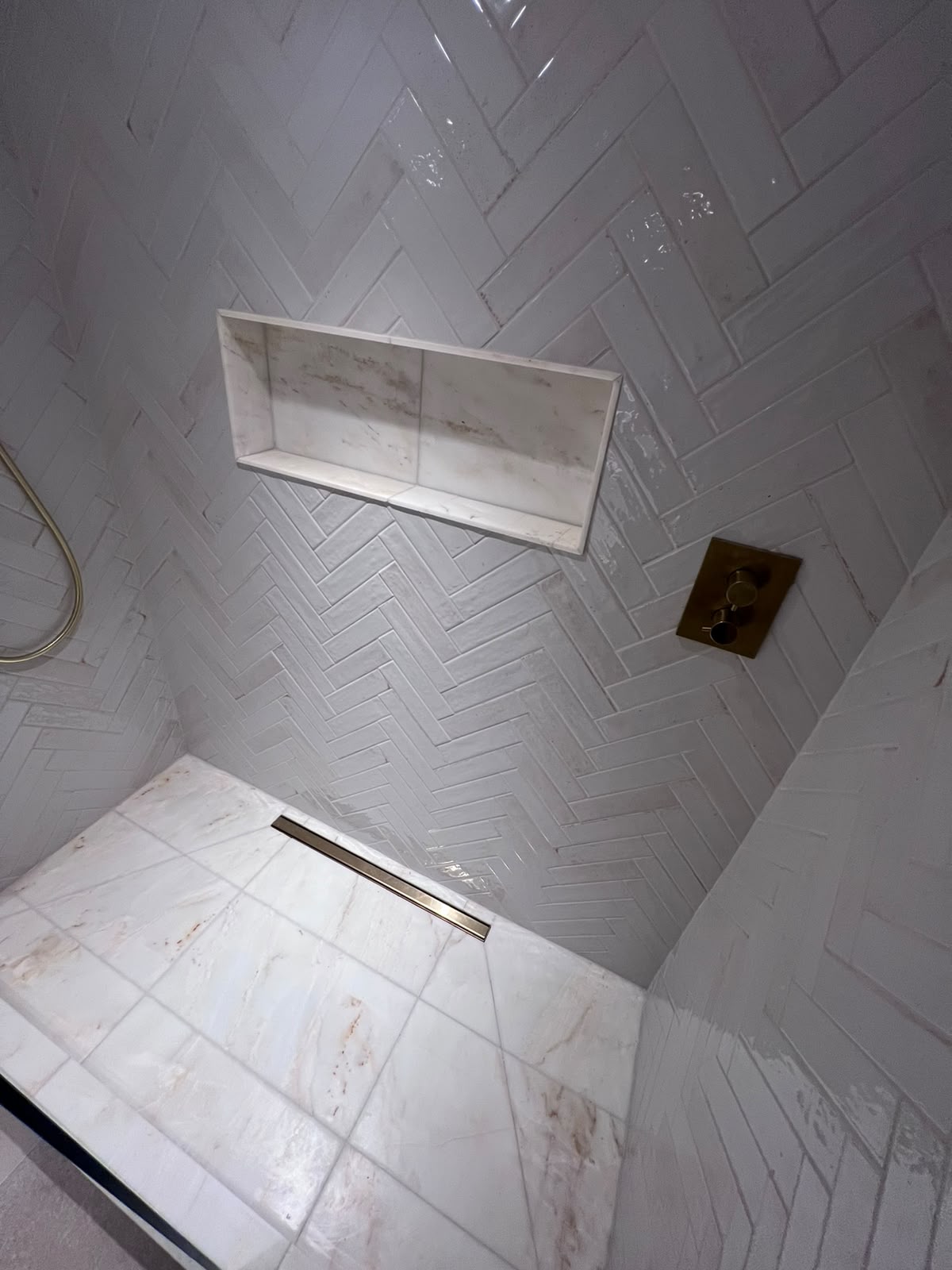
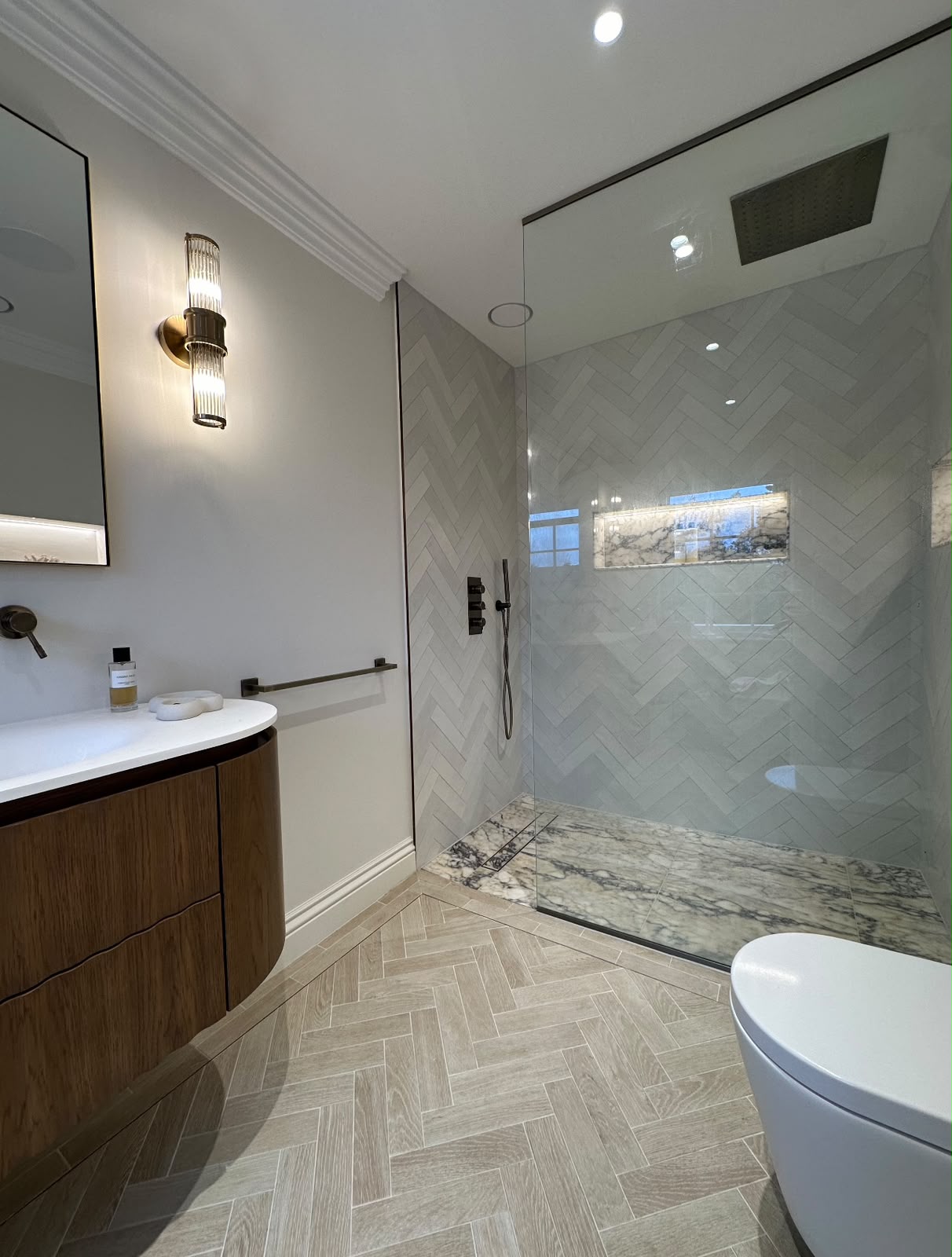
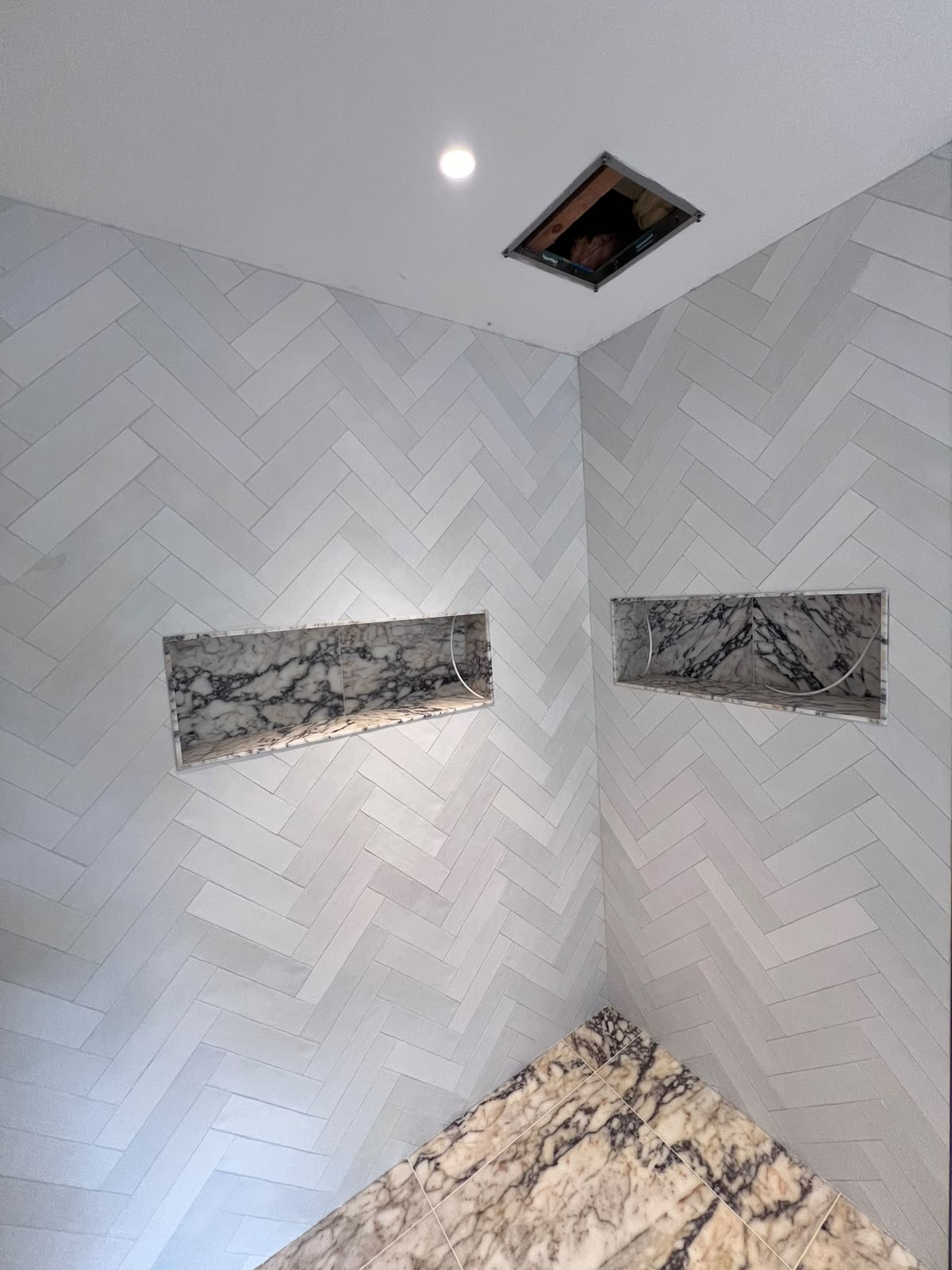
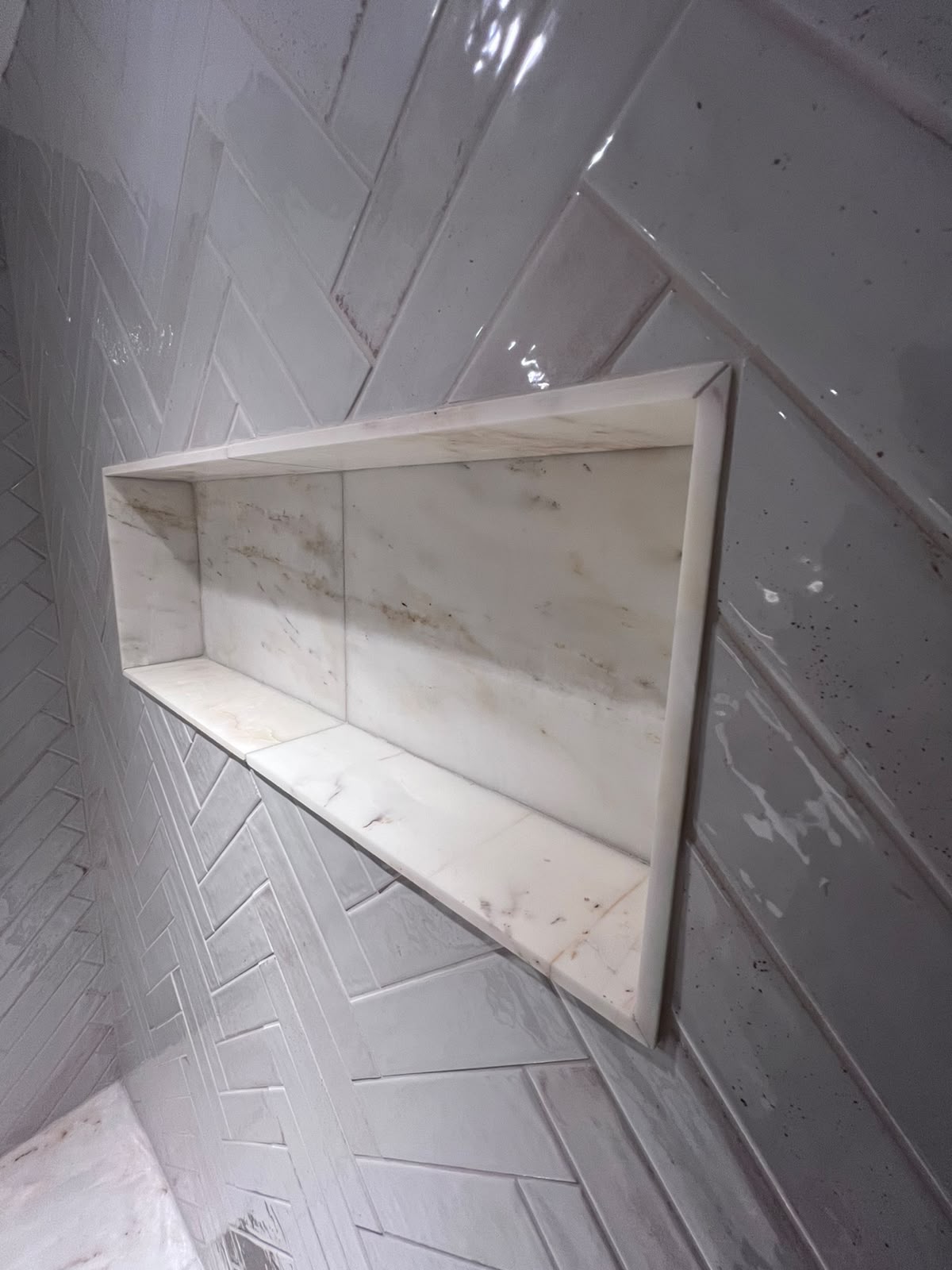
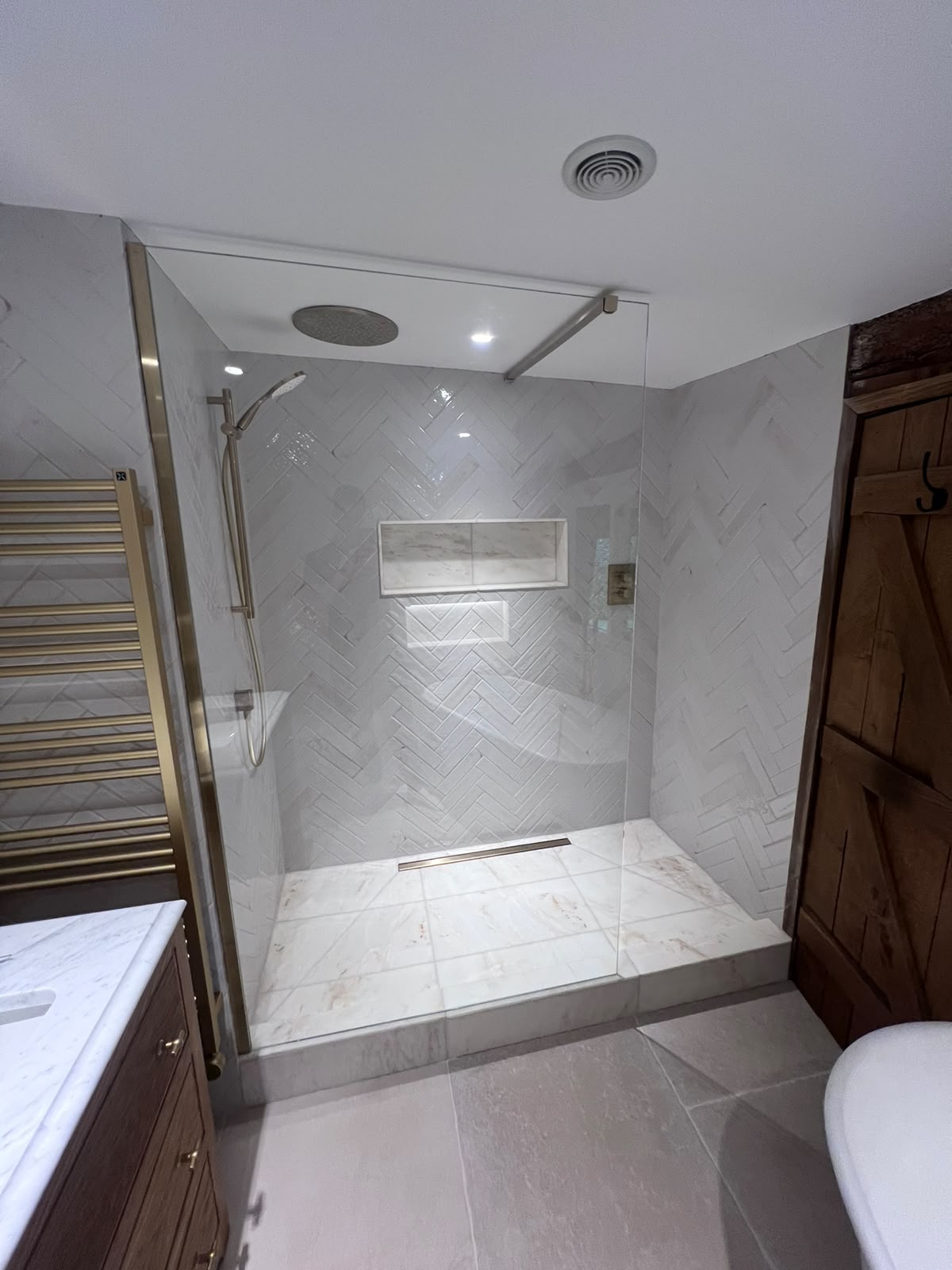
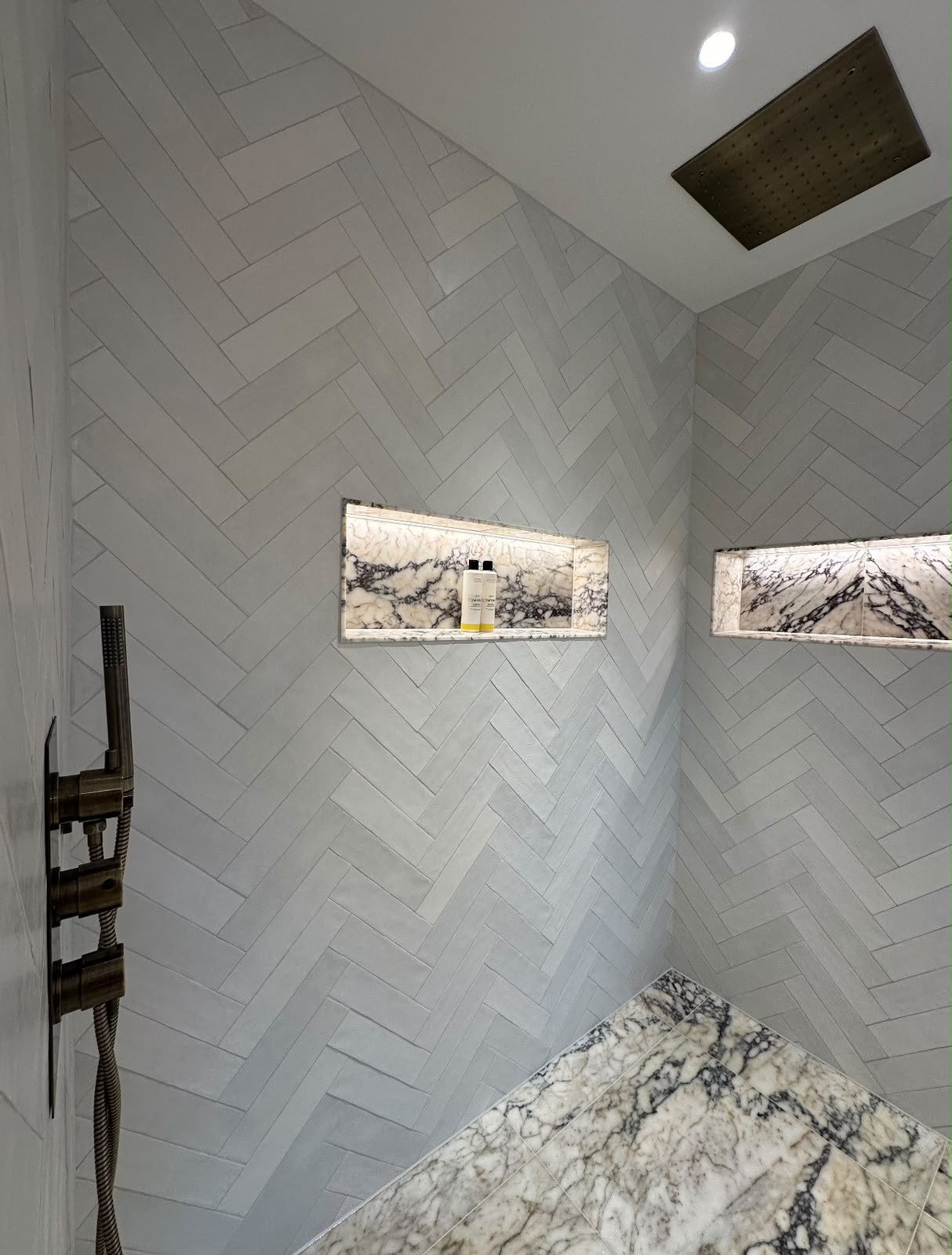
Herringbone Tile Installation in Kent: recent work
Where James works
Sevenoaks · Tunbridge Wells · Chislehurst · Orpington · Goudhurst · West Malling · Beckenham · Bromley · Maidstone · Tonbridge · Sidcup · Bexley · Swanley · Dartford · Petts Wood · West Wickham · Pembury · Edenbridge · Westerham
See all service areas
Next step
Get a fixed price for
your herringbone tile installation
Send a few details and James will arrange a site visit and a clear written quote, no obligation, no pressure. Prefer to talk it through first? Call 07863 778208, Mon–Sat, 7am–9pm.
Call 07863 778208- £10m public liability insurance
- 1-year workmanship guarantee
- Fixed prices with staged payments
Request your estimate
Tell James about the job and he'll come back with a clear, fixed price.
Typically answered the same working day, Mon–Sat, 7am–9pm.