
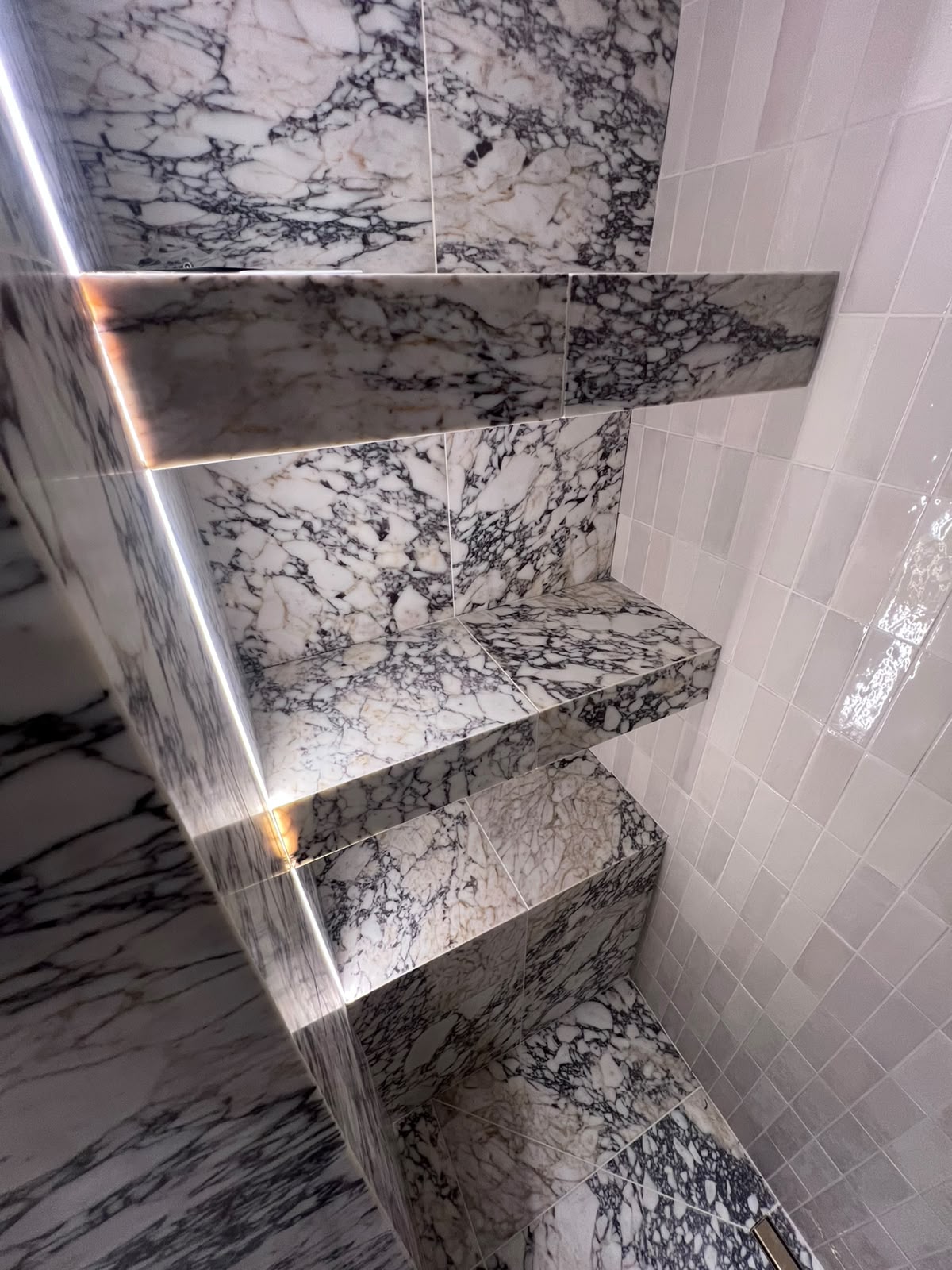
Mitred Edge Tilingfor Seamless, Trim-FreeTile Edges
45-degree mitred returns on niches, benches and steps, so tile turns the corner cleanly instead of being capped with plastic or metal trim.
4.9 on Google · 7 years' experience · 1-year workmanship guarantee
45°
Mitred returns, no edge trim
7 yrs
Experience with mitre detailing
£10m
Public liability insurance
4.9
Google rating
1 yr
Workmanship guarantee
What mitred edge tiling is and why it matters
A mitred edge finishes a tiled corner without any visible trim. Both tiles are cut back to 45 degrees and closed together, so the tile wraps the corner and the join disappears. It takes far longer than fitting a plastic or metal profile and leaves little room for error, which is why few tilers offer it as standard.
It is most often specified on shower niches, benches, steps and window reveals, and suits porcelain, natural stone and large-format tile, where a trim edge shows most. On plain walls with no returns there is nothing to mitre.
It is worth paying for because it is on permanent display. Trim dates as plastic yellows or metal scratches, while a mitred tile edge ages exactly as the rest of the tiling does.
What you get
- 45-degree mitred returns, no edge trim
- Niches, benches, steps and reveals
- Suited to porcelain, stone and large-format
- Dry-fitted and checked before fixing
- 1-year workmanship guarantee
What it costs to leave it
What goes wrong with mitred edges when they are rushed
Cutting without dry-fitting first is the most common failure. Both tiles must be cut to precisely 45 degrees so they close into a true right angle. Slightly out and the corner gapes or overlaps, and grout cannot hide it. Once fixed, the only fix is breaking both tiles out and starting again.
Material choice adds risk. Porcelain and natural stone are harder and more brittle to cut at an angle, and the wrong blade chips the edge exactly where any flaw shows. That is why mitred work is planned and priced as a specific detail.
Because the join sits on a feature in daily use, a poor mitre is noticed every day, and correcting it usually means re-tiling the whole feature rather than one joint.
Mistakes that cause it
- Cutting mitres without dry-fitting both tiles together first
- Using a blunt or incorrect blade for porcelain or natural stone, causing chipped edges
- Cutting the angle slightly out, leaving a gap or overlap at the corner
- Attempting a mitre on very thin ceramic tile, which is prone to snapping
- Grouting a mitred joint too widely to hide an inaccurate cut
- Fitting a mitred niche before the surrounding wall tiling has been set out
How the work runs
A process you can follow
Step 1
Confirming where mitres are needed
At the site visit or during the wider tiling job, James identifies which niches, benches, steps or reveals will have exposed edges and agrees with you where a mitred finish is wanted rather than trim.
Step 2
Selecting suitable material
Tile thickness and material are checked to confirm they are suitable for mitring, porcelain, natural stone and large-format tile all mitre well, while very thin ceramic is generally unsuitable.
Step 3
Cutting the 45-degree angle
Both tiles meeting at the corner are cut precisely to 45 degrees using equipment suited to the material, with extra care taken on brittle materials like stone to avoid chipping the exposed edge.
Step 4
Dry-fitting and checking
The mitred tiles are dry-fitted together before anything is fixed permanently, checking the joint closes tightly and squarely with no gap or overlap.
Step 5
Fixing and finishing
Once confirmed, the tiles are fixed, the mitred joint is grouted or sealed neatly depending on location, and the feature is checked as part of final handover, covered by a 1-year workmanship guarantee.
What you actually get out of it
No trim to date or discolour
A mitred edge ages the same way the rest of the tiling does, rather than yellowing plastic or a scratched metal strip standing out within a few years.
Suited to the materials that show trim the most
Porcelain, natural stone and large-format tile all reveal a trimmed edge more obviously than small ceramic tile, mitring is the appropriate finish for these materials.
Checked before it is permanent
Every mitred corner is dry-fitted and checked for a tight, square joint before fixing, catching any inaccuracy while it can still be corrected.
A detail that lifts the whole room
Niches, benches and steps are focal points in daily use, a clean mitred edge is one of the details clients notice and remember most.
Fixed pricing, agreed up front
Mitred detailing is priced and agreed as part of the wider tiling quote, so there are no surprises when the feature is more involved than a flat wall.
1-year workmanship guarantee
Mitred edge work is covered under the same 1-year workmanship guarantee as the rest of the tiling, backed by 7 years' experience with the detail.
Mitred Edge Tiling in detail
Where mitred edges are used
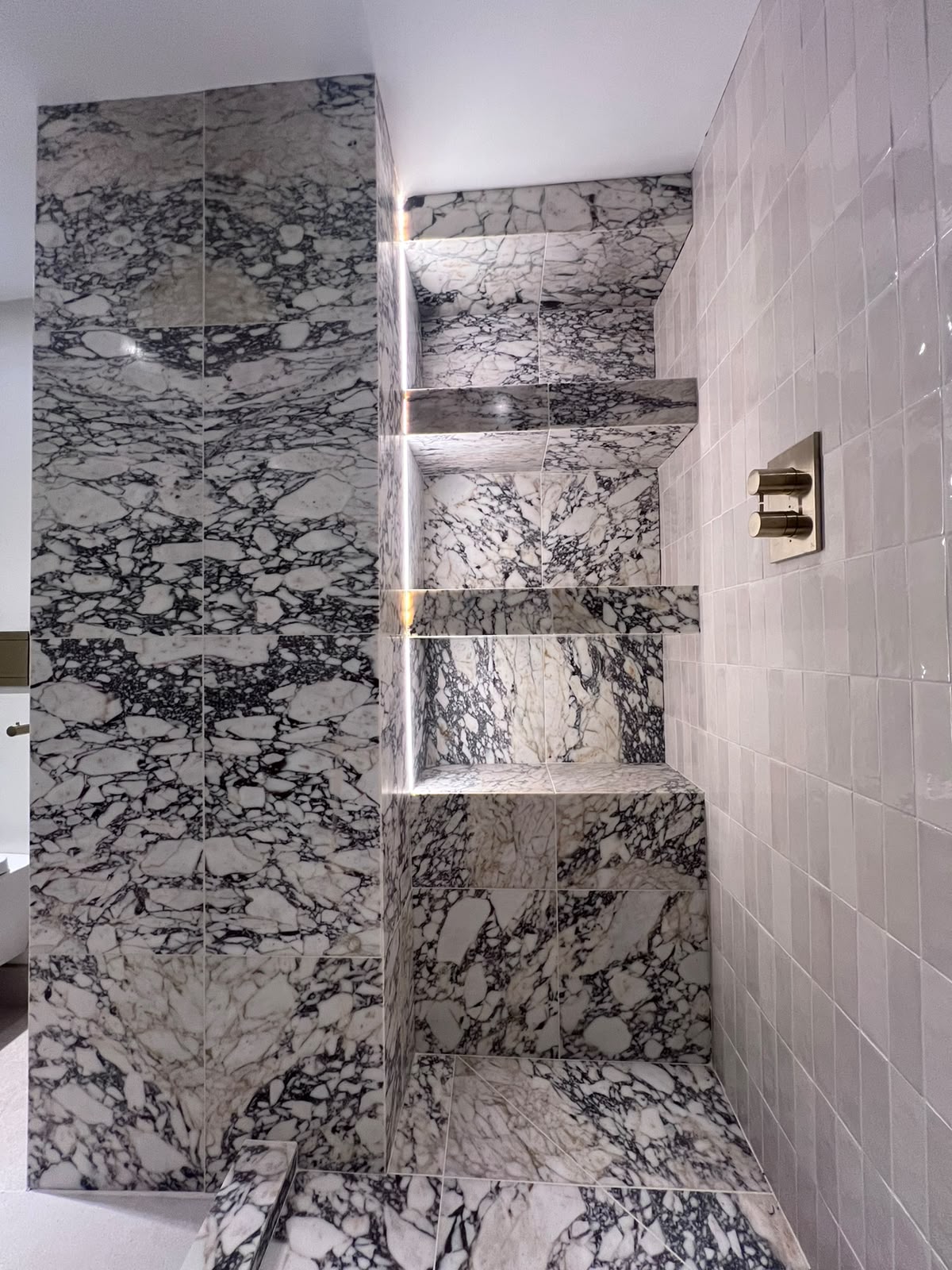
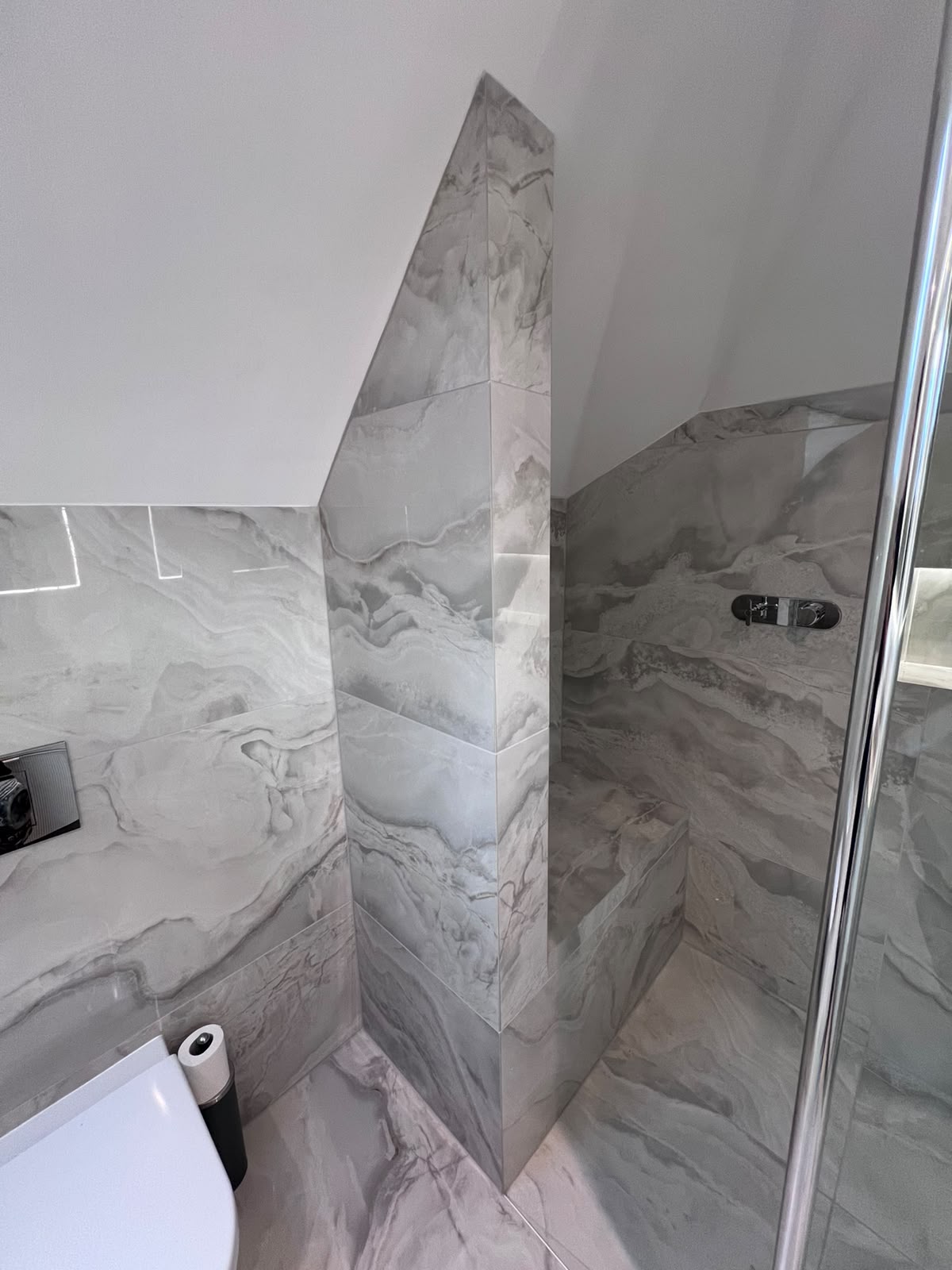
Shower niches are the most common application, a recessed shelf for shampoo and soap, where all four internal edges are exposed and benefit from a mitred finish. Benches and seats within a shower or wetroom have the same requirement on their visible faces. Steps, particularly into a sunken shower or level-change within a wetroom, need a durable mitred edge that will not lift or chip under regular foot traffic.
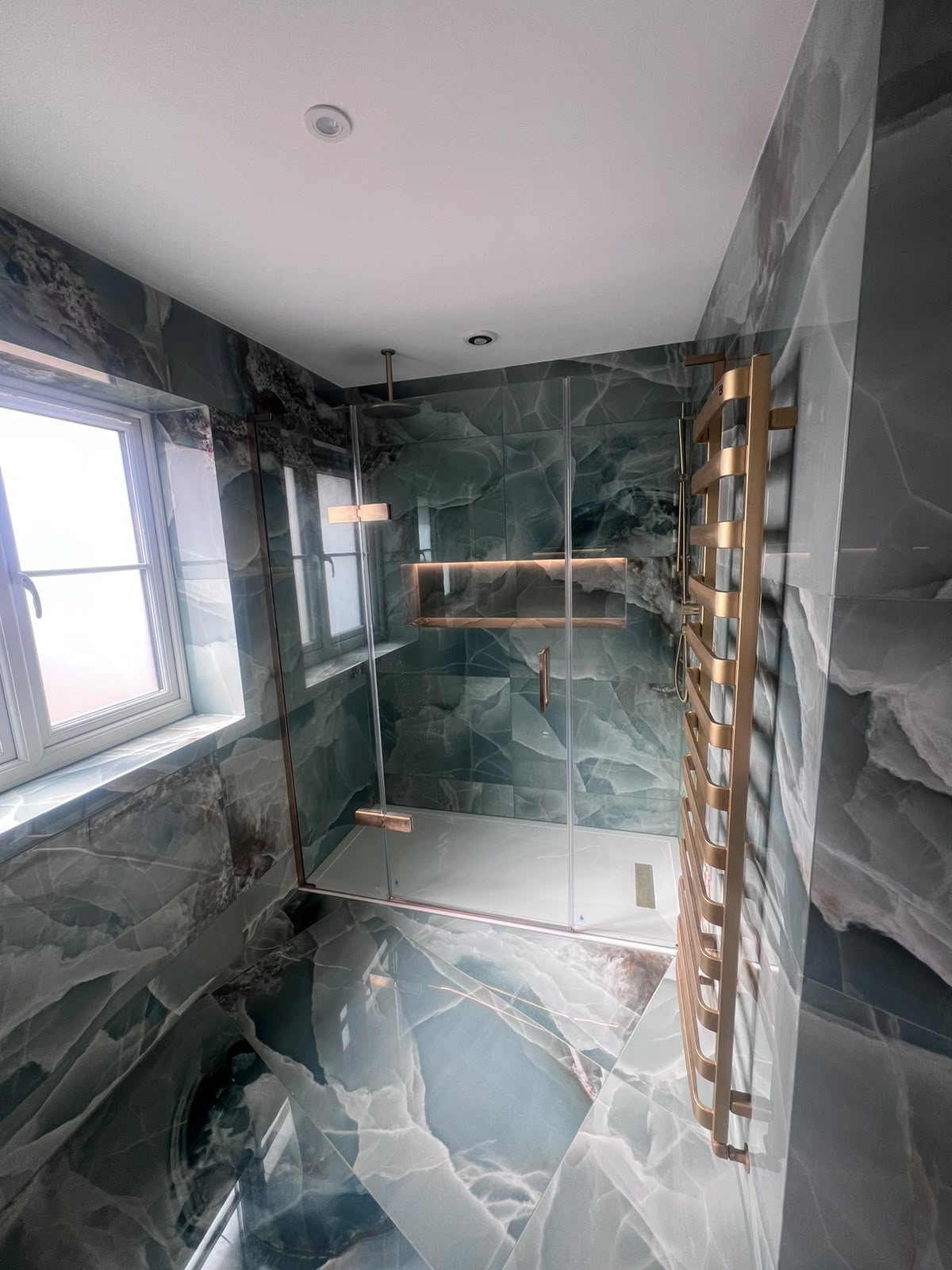
Window reveals in tiled bathrooms are another common location, where the depth of the reveal exposes tile edges on three sides. Any run of tiling that ends mid-wall, rather than into another surface, is a candidate for a mitred finish if trim is not wanted.
Mitred Edge Tiling: your questions answered
Yes, because it takes longer to cut and fit accurately, and demands more precision than a trimmed edge. It is priced as part of the wider tiling quote, discussed at the site visit.
Porcelain, natural stone and large-format tile all mitre well. Thin ceramic wall tile is generally not suitable, since it is too thin to hold a stable angled edge.
It depends on how many mitred edges are involved and the material used, but it takes longer than a standard trimmed edge; this is factored into the overall tiling programme.
It is most common in bathrooms and wetrooms on niches, benches and steps, but the same technique applies wherever a tiled edge is exposed and a trim-free finish is wanted, including kitchen features.
A well-cut and fitted mitred joint shows a fine, consistent line where the two tiles meet at the corner, rather than a visible strip of trim; this is the trade-off homeowners choose it for.
Yes, mitred detailing is covered under the same 1-year workmanship guarantee as the rest of the tiling work.
This usually means removing and re-tiling the feature in question, since a mitred edge cannot generally be retrofitted onto tiles already fixed with trim.
Yes, as part of tiling and bathroom refurbishment work across Kent and South East London, including Tunbridge Wells, Sevenoaks, Bromley and Maidstone. Call 07863 778208, Monday to Saturday, 7am to 9pm.
Mitred Edge Tiling in Kent: recent work
Where James works
Sevenoaks · Tunbridge Wells · Chislehurst · Orpington · Goudhurst · West Malling · Beckenham · Bromley · Maidstone · Tonbridge · Sidcup · Bexley · Swanley · Dartford · Petts Wood · West Wickham · Pembury · Edenbridge · Westerham
See all service areas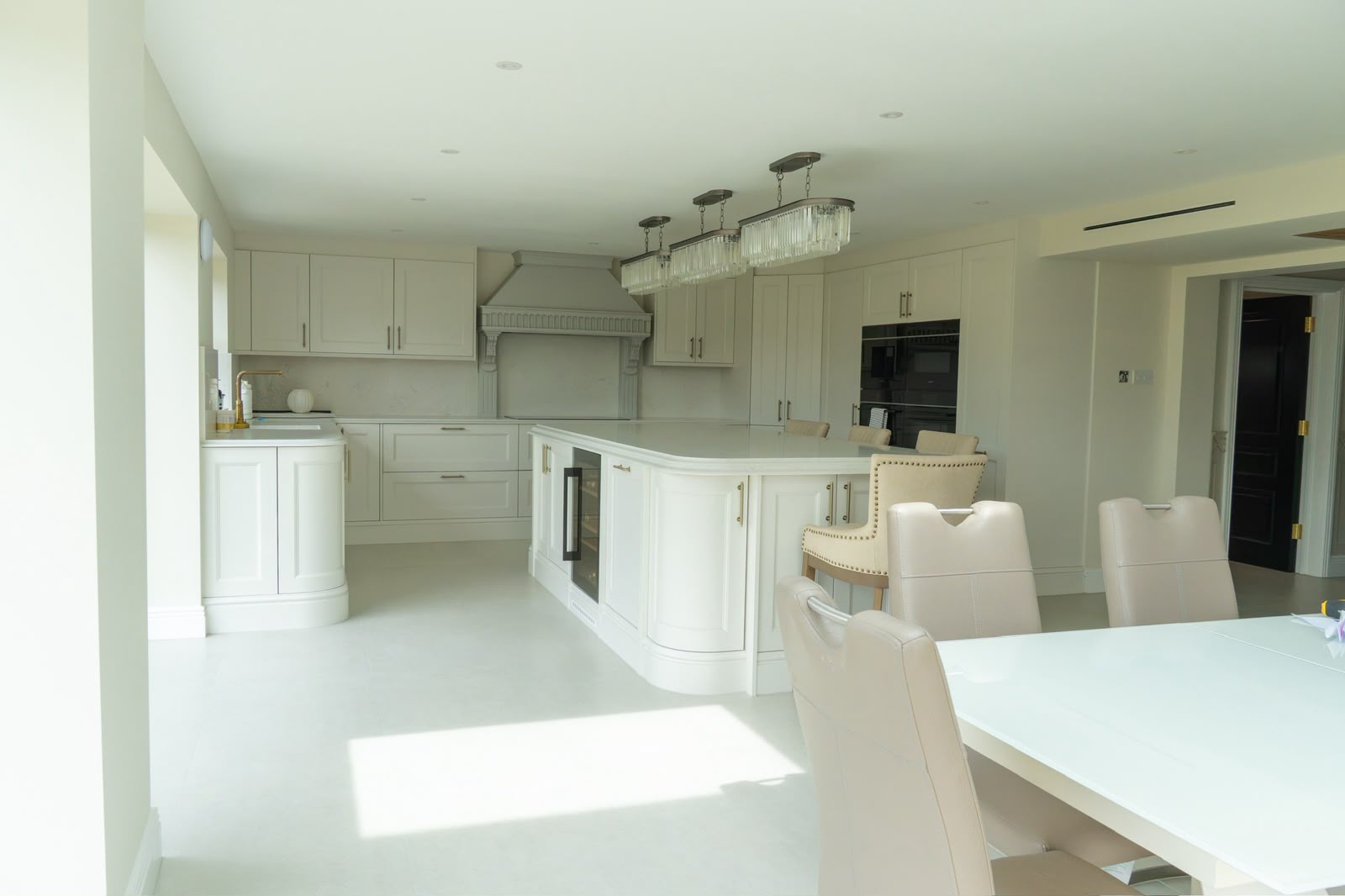
Next step
Get a fixed price for
your mitred edge tiling
Send a few details and James will arrange a site visit and a clear written quote, no obligation, no pressure. Prefer to talk it through first? Call 07863 778208, Mon–Sat, 7am–9pm.
Call 07863 778208- £10m public liability insurance
- 1-year workmanship guarantee
- Fixed prices with staged payments
Request your estimate
Tell James about the job and he'll come back with a clear, fixed price.
Typically answered the same working day, Mon–Sat, 7am–9pm.