
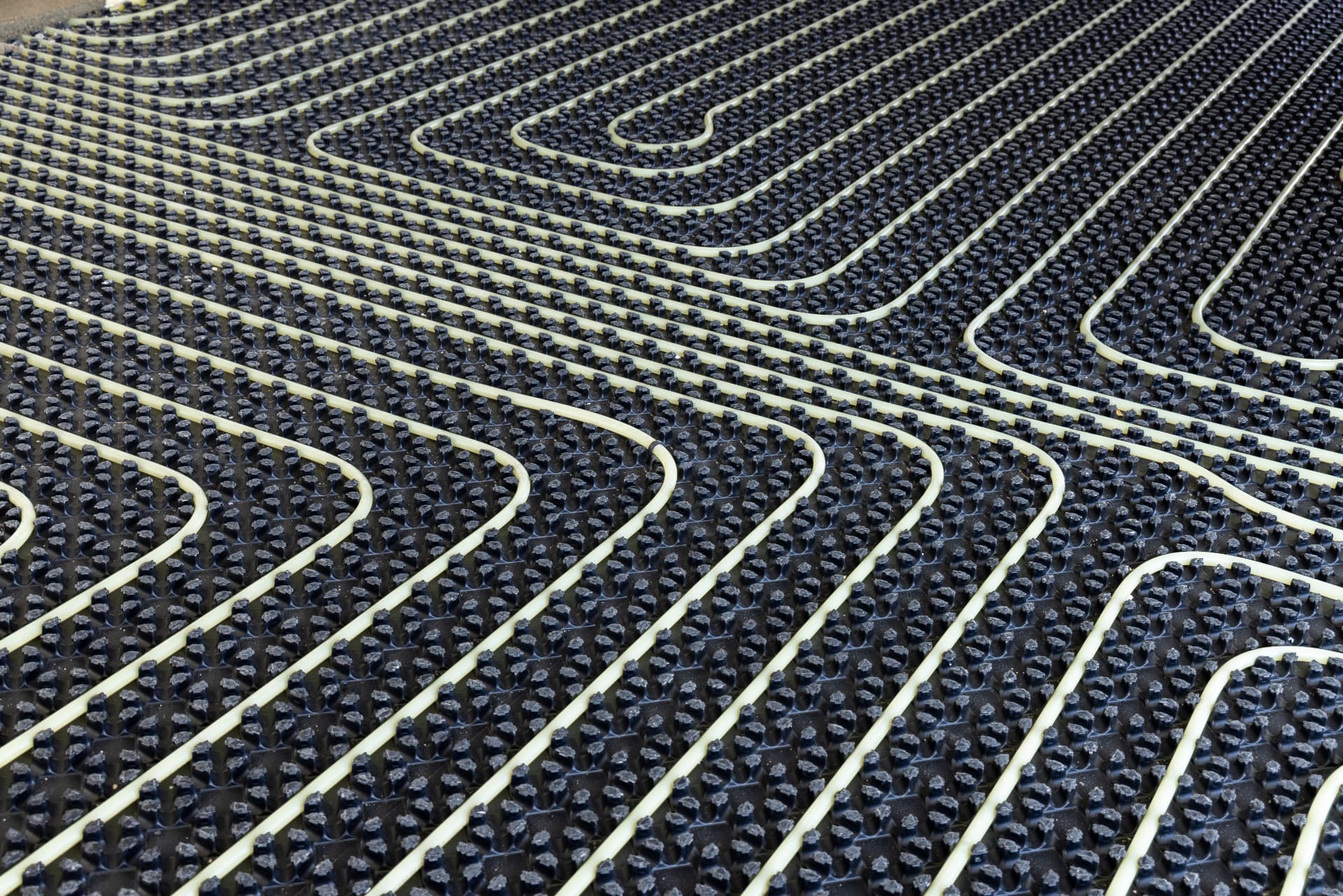
Electric UnderfloorHeating Installationin Kent
Electric underfloor heating fitted, tested and tiled over correctly, so the mat survives the tiling process and every zone works from day one, including Thermosphere systems across Kent and South East London.
4.9 on Google · 7 years' experience · 1-year workmanship guarantee
£10m
Public liability insurance
7 yrs
Tiling experience
4.9
Google rating
1 yr
Workmanship guarantee
From £55/m²
Fixed tiling prices
What electric underfloor heating installation covers
Electric underfloor heating uses a thin heating mat or loose cable laid under the tiled floor and connected to a thermostat, warming the floor directly rather than relying on radiators alone. It is fitted as part of a bathroom, en-suite or kitchen refurbishment, most often using Thermosphere systems.
It suits any tiled room where cold floors are a known problem: bathrooms and en-suites in older properties around Sevenoaks and Tunbridge Wells, large porcelain kitchen floors in Bromley and Beckenham, and new-build en-suites. Plan it before tiling starts, since the mat, insulation board and adhesive all add floor height.
It has to be right first time because the heating element is buried under the tiling. There is no way to inspect or repair it without lifting the floor, so damage caused during installation only shows when the system is switched on.
What you get
- Thermosphere systems fitted regularly
- Continuity tested before and after tiling
- Mat fully encapsulated in adhesive
- Sensor placement planned with the layout
- 1-year workmanship guarantee
What it costs to leave it
Why mats fail, and what it costs to fix once tiled over
The commonest cause of failure is physical damage during tiling: a trowel edge cutting a cable, or a mat pierced by a screw. Locating the fault then needs specialist testing, and fixing it means lifting tiles.
The second is burying the mat without testing continuity before and after tiling. An already faulty mat is only discovered when the heating goes on and part of the floor stays cold, with tiles already down.
Either way the heating simply does not work, and the repair is disruptive next to the simple step of testing at each stage. Sensor placement is the other overlooked detail: a sensor under a fixed unit gives a false reading.
Mistakes that cause it
- Damaging heating cable or mat with a trowel or screw during tiling
- Not testing continuity before, during and after tiling
- Placing the floor sensor under an area that will be covered by a fixed unit
- Not accounting for the added floor height against door thresholds
- Using the wrong adhesive thickness, leaving the mat under-encapsulated
- Running the system too soon before adhesive has fully cured
How the work runs
A process you can follow
Step 1
Site visit and system selection
James assesses the room, existing floor build-up and heating requirement, and discusses suitable electric systems including Thermosphere, coordinating with an electrician from his trusted network for the final connection.
Step 2
Insulation board and layout
Insulation board is laid where needed to direct heat upward rather than into the subfloor, and the heating mat layout is planned around fixed units, thermostat position and sensor placement.
Step 3
Mat installation and continuity testing
The mat or cable is fitted, and continuity is tested before any adhesive or tile goes near it, confirming the system works before it becomes inaccessible.
Step 4
Encapsulation and further testing
The mat is fully encapsulated in adhesive with careful trowel technique to avoid damage, and continuity is tested again once covered, before tiling proceeds.
Step 5
Tiling and final commissioning
Tiles are laid over the cured adhesive bed, a final continuity test is carried out, and the electrician connects the thermostat so the system is confirmed working before handover.
What you actually get out of it
Tested at every stage, not just at the end
Continuity is checked before, during and after tiling, so faults are caught while they are still fixable rather than after the floor is finished.
Full encapsulation protects the mat long-term
Correct adhesive coverage means the heating element is fully protected within the floor build-up, not left exposed at the edges.
Warmer floors without retiling later
Fitted as part of a tiling job, underfloor heating adds comfort without a separate, disruptive phase of work.
Coordinated electrical connection
James works with a trusted electrician to connect and commission the thermostat, so the tiling and electrical work are sequenced correctly.
Fixed pricing as part of the tiling job
Underfloor heating installation is quoted alongside the tiling work, with a fixed price and staged payments.
1-year workmanship guarantee
The tiling and installation work is covered for a year against workmanship faults.
Electric Underfloor Heating Installation in detail
Systems: mats, loose cable and Thermosphere
Mat systems, where the heating cable is pre-spaced and fixed to a mesh, are the most common choice for regular-shaped rooms because they are quick to lay evenly. Loose cable systems offer more flexibility around awkward room shapes, fixtures and irregular floor plans, at the cost of more careful spacing during installation. Thermosphere is one of the systems James fits regularly, and is a routine part of bathroom and en-suite refurbishments across Kent.
Both mat and cable systems rely on the same core principles: correct spacing to avoid hot spots or cold spots, insulation board beneath to direct heat into the room rather than the subfloor, and testing at every stage before it disappears under tile.
Electric Underfloor Heating Installation: your questions answered
It is priced as part of the overall tiling job after a site visit, since room size and the system chosen both affect cost. A fixed price with staged payments is agreed before work starts.
Yes, Thermosphere is one of the electric underfloor heating systems James fits regularly as part of bathroom and en-suite tiling jobs across Kent and South East London.
It is usually fitted within the wider tiling job timeline, adding time for insulation board, mat fitting and adhesive curing before tiles go down. An exact schedule is given at the quote stage.
It typically adds around 10-15mm to the floor build-up including insulation board and adhesive, which is checked against door thresholds during the site visit so there are no surprises.
The heating mat installation and tiling are carried out by James, with the final electrical connection to the thermostat handled by an electrician from his trusted network, coordinated as part of the job.
Yes, the installation and tiling work is covered by a 1-year workmanship guarantee.
Correctly fitted and tested electric underfloor heating systems are designed for long service life within a tiled floor, provided the mat is undamaged during installation, which is why testing at each stage matters so much.
Yes, underfloor heating installation is carried out across Kent and South East London, including Orpington, Bexley, Sidcup and Dartford.
Where James works
Sevenoaks · Tunbridge Wells · Chislehurst · Orpington · Goudhurst · West Malling · Beckenham · Bromley · Maidstone · Tonbridge · Sidcup · Bexley · Swanley · Dartford · Petts Wood · West Wickham · Pembury · Edenbridge · Westerham
See all service areas
Next step
Get a fixed price for
your electric underfloor heating installation
Send a few details and James will arrange a site visit and a clear written quote, no obligation, no pressure. Prefer to talk it through first? Call 07863 778208, Mon–Sat, 7am–9pm.
Call 07863 778208- £10m public liability insurance
- 1-year workmanship guarantee
- Fixed prices with staged payments
Request your estimate
Tell James about the job and he'll come back with a clear, fixed price.
Typically answered the same working day, Mon–Sat, 7am–9pm.