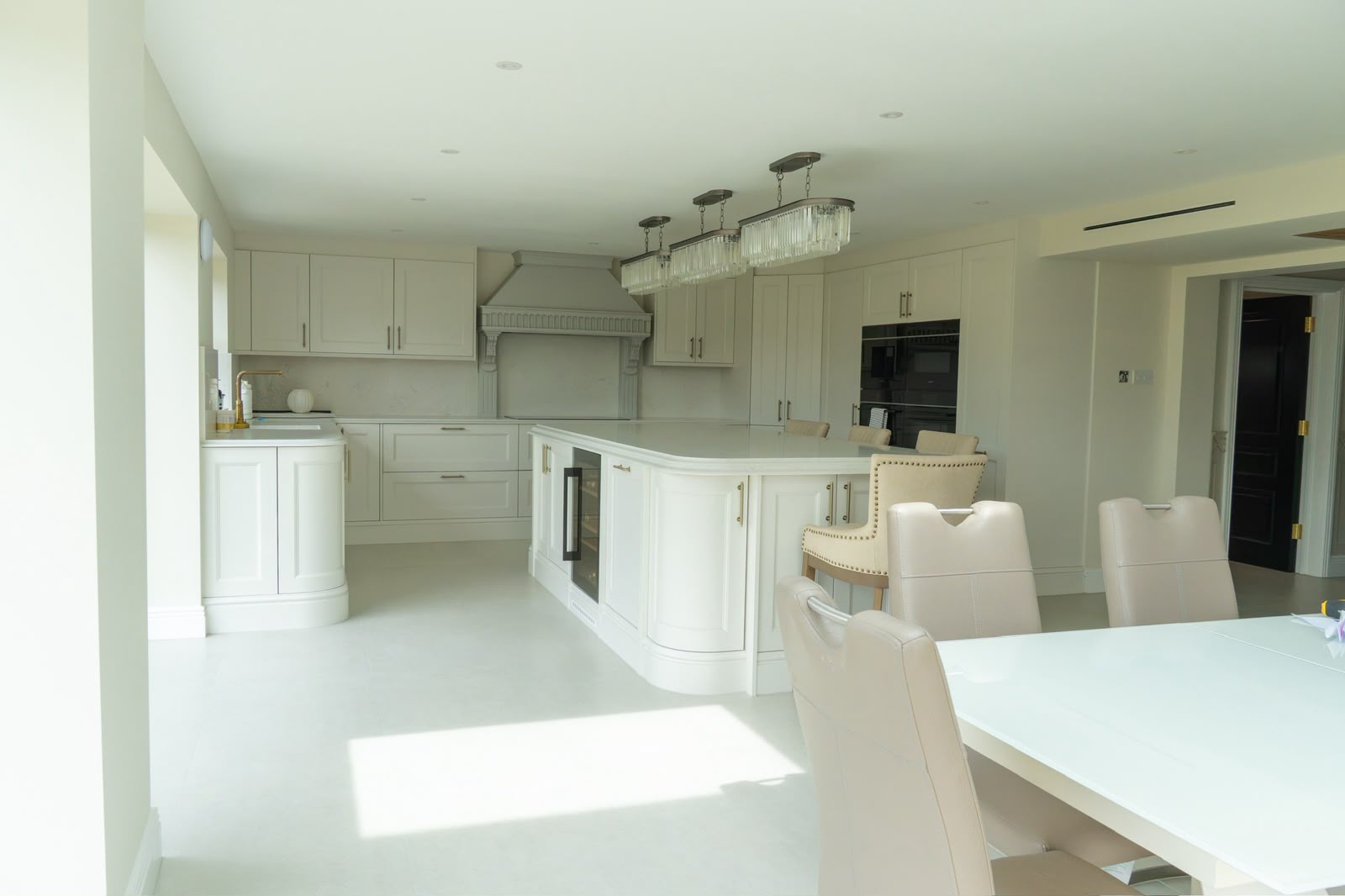
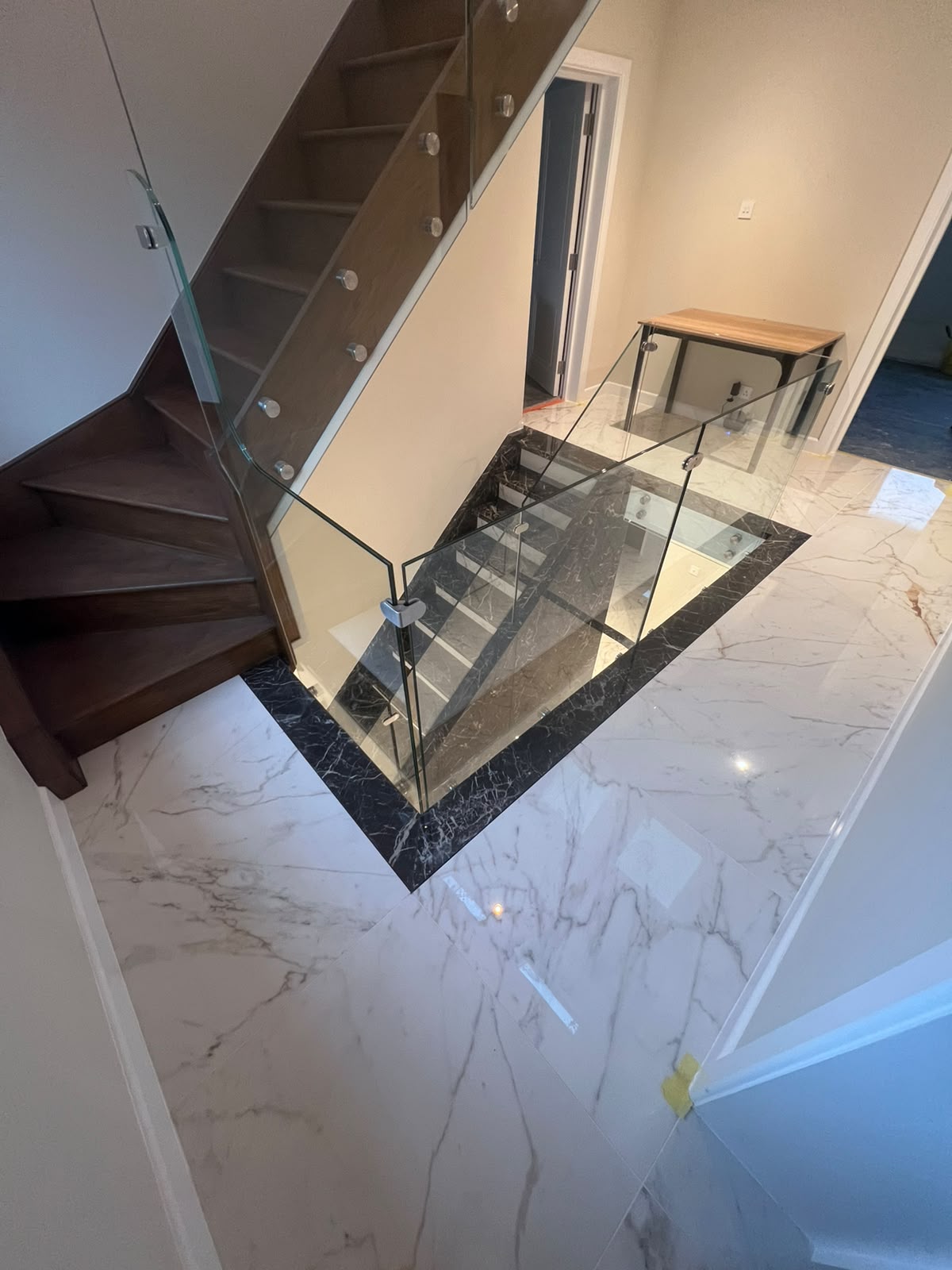
When DIY tiling can make sense
A small splashback behind a hob or sink, using standard-sized ceramic tiles on a sound, flat wall, is a reasonable first DIY project. There is no waterproofing to get wrong, mistakes are easy to see and correct, and the cost of materials is low if it needs redoing.
If you have time, patience and the right tools, a project like this can be satisfying. The difficulty rises quickly once you move to floors, wet areas, large tiles or patterns.
Preparation is where DIY usually goes wrong
The finish of any tiling job is decided before the first tile goes on. Walls need to be flat and strong enough for the weight of the tiles. Floors need to be rigid, level and primed correctly. Old tiles, paint and loose plaster may need removing. This work is slow, unglamorous and easy to underestimate.
Tiling over a floor that flexes leads to cracked grout and tiles. Tiling over an uneven wall leads to lippage, where tile edges sit at different heights and catch the light. Professionals spend a large share of every job on preparation for exactly this reason.
Waterproofing: the hidden risk
Tiles and grout are not waterproof on their own. In showers, around baths and especially in wetrooms, water will find its way through grout lines over time. Without a proper tanking system beneath, it soaks into plasterboard, timber and joists, often without any visible sign until a ceiling stains or a floor goes soft.
Getting waterproofing right involves the correct membrane, sealing tapes at corners and joints, pipe collars and the right drying times. It is the single most common area where DIY bathroom tiling fails, and the repair usually means stripping out the tiles to fix it.
Tools, materials and cost
Doing it yourself saves on labour, but it is not free. A decent wet saw or tile cutter, levelling system, notched trowels, mixing paddle and spirit level all add up, and harder materials such as porcelain need better tools to cut cleanly. Breakages and wasted tiles from learning are another hidden cost.
Professionals also know which adhesive, grout and primer suit each tile and surface. Using the wrong adhesive for large-format porcelain, natural stone or a heated floor is a common cause of early failure.
Time and disruption
An experienced tiler works quickly and in the right order, planning cuts and layout so the job flows. For a first-time DIYer, the same bathroom can take several weekends, leaving the room out of action far longer. For a family bathroom or kitchen, that disruption has a real cost.
Finish quality and complex designs
The details that make a tiled room look expensive are the hardest to achieve without experience: centred layouts with balanced cuts, perfectly straight grout lines, tight joints on large-format tiles, neat cuts around pipes and sockets, and sharp external corners.
Patterns such as herringbone need precise setting out from the start, or the pattern wanders across the room. Mitred edges, where tiles meet at a clean 45-degree corner with no trim, take specialist cutting and patience. Natural stone has to be handled, fixed and sealed correctly. These are the jobs where professional tiling pays for itself.
Guarantees and peace of mind
If a DIY job fails, the cost of putting it right falls on you, and often includes the tiles, the materials and the labour to remove them. A professional tiler stands behind the work. JB Tiling agrees a fixed price before work starts and provides a 1-year workmanship guarantee.
Making the right choice
If the job is small, dry and simple, DIY may be worth a try. If it involves a shower, a wetroom, a floor, large-format tiles, natural stone or a pattern, a professional is usually the better value over the life of the room.
James and his team work across Kent and South East London. Request a free estimate and they will look at your project, explain what it involves and give you a fixed price, so you can decide with all the facts.
Find out more about our professional tiling in Kent or see examples on our work.
Common questions
- Is it cheaper to tile yourself?
- You save on labour, but tools, breakages and the risk of redoing failed work can narrow the gap, especially on floors and in wet areas.
- What tiling jobs should I leave to a professional?
- Showers, wetrooms, floors, large-format tiles, natural stone, herringbone patterns and mitred edges, where preparation and precision decide the result.
- Does JB Tiling guarantee its work?
- Yes. A fixed price is agreed before work starts and the work carries a 1-year workmanship guarantee.